What Is the Tour Dashboard?
Free walking tours don’t fail because of bad guides or weak demand. They fail because operators are trying to run a high-volume, last-minute, platform-dependent business with tools built for fixed-price, low-variance tours. If your operation feels chaotic despite “doing everything right,” the problem is structural—not personal.
This post explains what a tour dashboard actually is, why it exists, and why generic booking tools quietly fail free tour companies at scale.
Who This Is For
This is written for:
- Small free tour teams with 3–10 guides juggling daily tours
- Large operations with 50–100+ guides across languages, routes, and cities
If you are running free tours and relying on FareHarbor, TrekkSoft, spreadsheets, inboxes, and WhatsApp, you already know something is broken—you just might be normalizing the chaos.
My Perspective
I’m a founder, a former tour guide (still active occasionally), and I’ve worked closely with dozens of free tour operators worldwide. I’ve seen operations from the inside: guides on the street, operators in the back office with steaming phones, and booking platforms dictating terms.
Barcelona is one of the most competitive free tour cities on the planet. I know firsthand what happens when volume, reviews, and guide coordination collide.
One Sentence: What Is a Tour Dashboard?
Operationally, a tour dashboard is a booking-mail processor, booking aggregator, scheduling helper, and reporting tool that centralizes bookings from all sources, allows guides to check-in travelers, and shows performance by platform, language, tour, and city—while acting as a reminder and coordination system for guides.
How Free Tour Companies Actually Coordinate with Guides
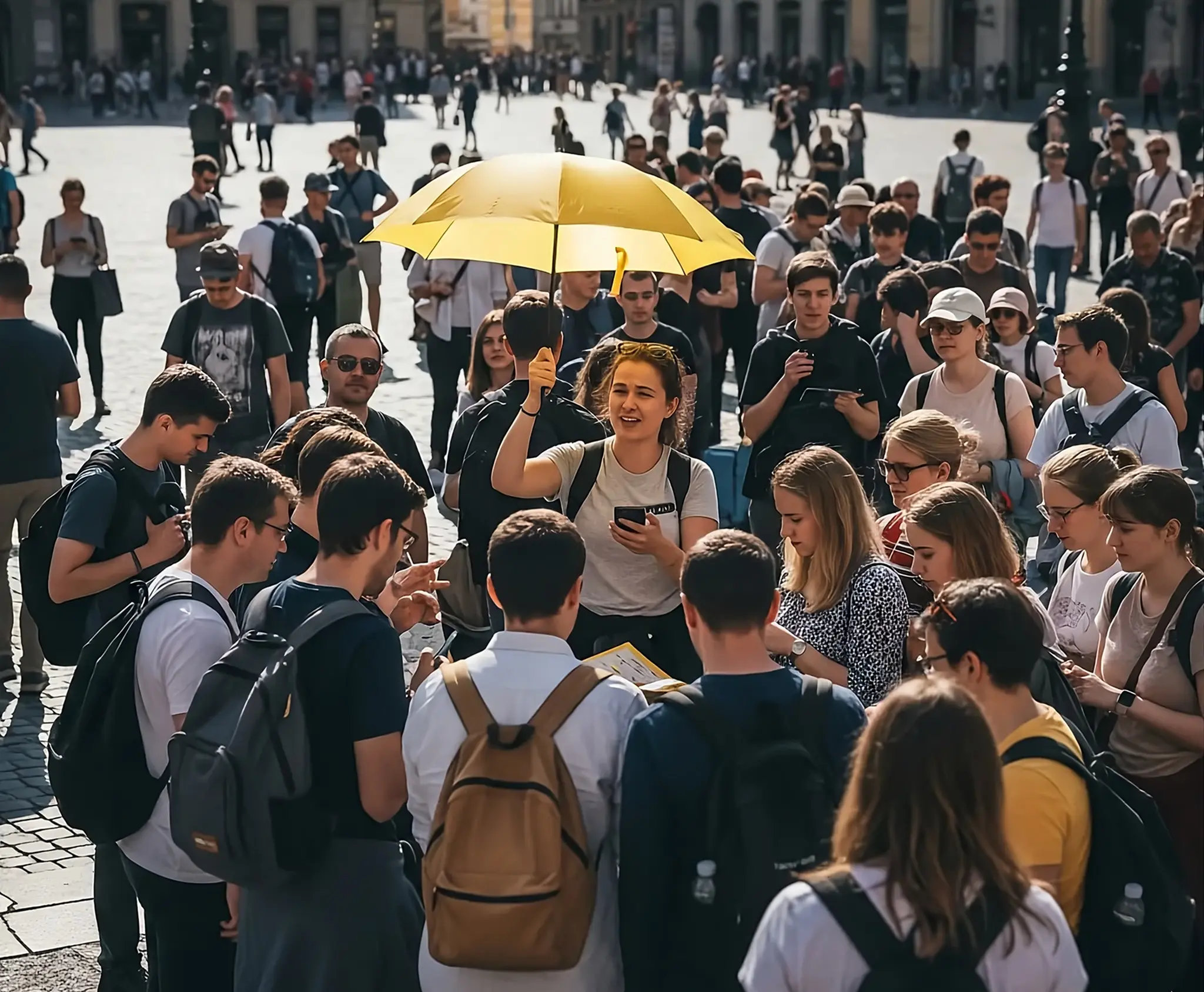
Every free tour company eventually hits the same wall: coordinating dozens of guides with shifting availability, unknown group sizes, and last-minute booking spikes. Most teams try to solve this with messages, spreadsheets, and forwarded emails—until it collapses.
A tour dashboard is the interface between the company and its guides.
It’s not a tool only managers touch. It’s the system the entire team operates inside:
- Guides receive assignments, reminders, and visibility at the right time
- Operators stop micro-managing bookings, messages, and attendance
- Everyone works off the same source of truth
If your guides are still coordinating via WhatsApp, screenshots, forwarded emails, and last-minute voice notes, you don’t have a system—you have social duct tape.
What the Tour Dashboard Is Not
- Not a booking platform
It does not sell tours. It helps you survive and scale the bookings you already need to accept to remain visible on platforms. - Not for every kind of tour
This is not for museum tours, private experiences, or adventure tours with fixed capacity and upfront payment. - Only for Free Walking Tours
Free tours have unpredictable volume, delayed compensation, group dynamics, and platform dependency.
Why Free Tours Are Structurally Different
Free tours combine three factors that paid tours don’t:
- Group-based execution with unknown size until shortly before the tour
- Payment at the end, based on tips rather than bookings
- Platform-driven demand where reviews and rankings decide survival
This creates a unique dynamic: you must accept almost everyone, avoid cancellations at all costs, and scale guides dynamically—not statically.
The Core Problems Booking Tools Do Not Solve
1. Booking Source Chaos
Free tour operators need to accept bookings from anywhere: GuruWalk, FreeTour.com, Civitatis, GetYourGuide, Viator, Buendía, direct website bookings, and even email-only partners.
A tour dashboard absorbs bookings from all sources and normalizes them into one operational view. Control over demand sources is survival, not a nice-to-have.
2. Guide Management Under Uncertainty
Free tours do not have fixed group sizes days in advance. Guides have different availabilities, languages, group limits, and reliability profiles.
A dashboard enables late-stage scaling of guides, controlled visibility of booking numbers, automated reminders, and fewer operational failures.
What a Bad Day Looks Like Without a Dashboard
- Overbooked tours and not enough guides on the street
- Guides missing shifts due to forgotten assignments
- Guides disengaging early because booking numbers look low too soon
- Support overload from repeated traveler questions
- Reputation damage from stress-induced negative experiences
What the Tour Dashboard Actually Changes
- Centralizes bookings without platform dependency
- Distributes work fairly and predictably
- Controls information timing instead of oversharing
- Reduces operator stress and guide burnout
- Turns chaos into repeatable operations
Final Thought
Free tours succeed because of human connection, spontaneity, and accessibility. They fail
because operators try to run them with tools designed for paid, predictable products.
A tour dashboard exists because free tours deserve infrastructure built for how they actually work—not
how booking platforms wish they did.